

dreams
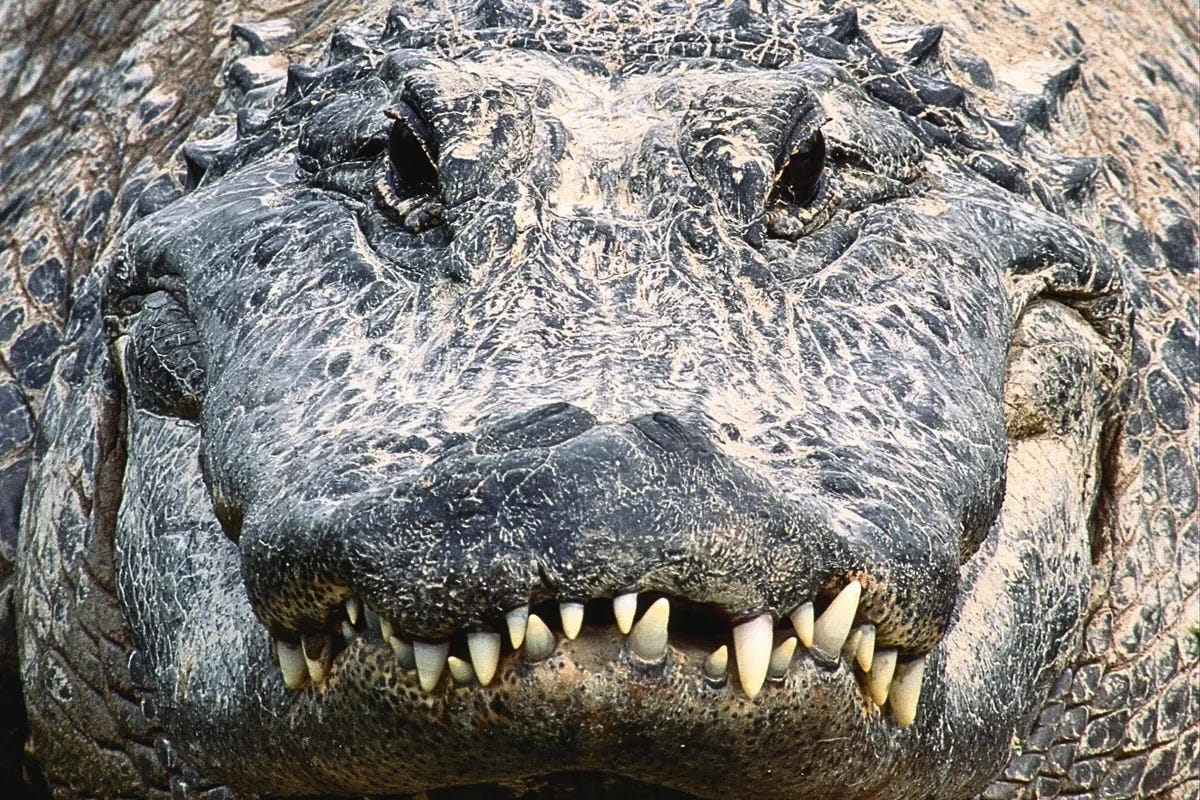
i woke up in the early morning in the middle of a loud gust of wind in the canyon, in the middle of a dream. in the dream jo had asked me to catch a shark for dinner. a live one. i got an alligator instead. i caught a small (for an) alligator in a medium sized-cage, and proudly announced to jo — look, i caught a shark! for your birthday dinner!
but then paused… was it a shark? … or… or was it an alligator? i couldn’t remember. i also couldn’t remember how i caught it.
oh no, i stuttered, haltingly. i think i caught an alligator. oh no, she said in response.
i definitely think we need a shark, she went on. and don’t you know, alligators are one of the most dangerous creatures alive? how would we even cook it?
i didn’t know. but i also didn’t know how we would cook a shark.
together, we stared at the shaking cage, ready for the alligator to burst forth at any moment.
disorientation
i haven’t written here the last month or so, because i’ve been furiously writing elsewhere. Stamp-Stump-Click-Clacking away (for anyone who has heard me type, you know this sound…) in a chaotic google doc (titled, MP FINAL FINAL FINAL, bc obviously there had been two other “final” docs before it), for my thesis. a thesis that, a year ago, i decided to write about the experience of insecurity in nonmonogamous dynamics, and how the dance form i do, contact improvisation, might have something to say or some way to dance about it.
this was my Big Plan. and i felt Really Good about it. but then i got disoriented.
i have spent the last 8 months actively turning towards the experience of disorientation in my relationships, and attempting to write about it.
it has been one of the hardest things i have ever done.
it has also been one of the truest things i have ever done.
it also doesn’t feel finished.
on sunday, i turned in a half-baked thesis. with a small caged alligator still there, uncooked and trembling.
drafting
on friday of last week, i woke up to skies that were no longer sunny and 70*, to imminent snow and freezing temperatures. i dragged myself to my last full cohort seminar of the year, where I sat alone, near the door, ready to bolt at any sign of danger. i drove back to the house where i was dog sitting (mhm) in the middle of a snow storm, took an afternoon bath. then, for the next six hours, i furiously and ferociously reorganized and filled out the rough rough draft of my paper. at 7pm. i halted.
i think I’m done. i actually said out loud, to no one other than myself, and maybe ma, the sweet dog who had been sitting steadily by my feet. i think, this thing is finished. or finished enough for now.
i blew out the candle and closed the laptop. i made dinner. i drank a glass of wine. i watched the final episode of DTF. (wtf?!)
as i lay down at the end of the day for what i hoped to be a much deserved and welcome sleep, my body had other things to say. i got nauseous. i felt spinny. i ran to the bathroom.
i puked 3 times.
debates
i’ve debated about whether or not it makes sense to share this paper, what i’ve been writing about for the last 8 months here, on this substack. i kind of feel like it doesn’t? or it does, but wants to be in a slightly different form. wearing a different kind of outfit.
but this morning i woke up, with my small alligator in the medium cage and the shark still not caught, let alone cooked, and thought… what do i have to lose from sharing?
this thing seems to want out.
so here it is. or at least (at most?), a little introductory taste…
Dancing with Disorientation:
a dance movement therapist contacts relational risk
(or, a somatic counselor becomes disoriented, and attempts to orient again)
by Teagan Lehrmann
May 2026
The End
February 22, 2026
We’re almost to Ned, in B’s truck. It’s 10:14am. She’s driving, I’m in the passenger seat. We’re on our way up to El Dora to ski. It’s February, but it looks and feels more like summer. The air is warm, and windy.
We’re in the truck, and we’re talking about C. B’s relationship to C — her understanding of what’s been happening. Where she thought, or hoped to be in a non-hierarchical system of relational anarchy, where there is actually functional primacy. Where this primacy has been avoided, unaddressed, confusing the situation. Confusing, and impacting B, as she orients towards them. Confusing and impacting me, as I orient towards her. The waterfall of unchecked prioritization, the trail of anxiety and avoidance. This dance we’re in together.
I’m just super disoriented, she says, turning to looking at me, tears collecting in the corners of her eyes. My breath settles lower into my belly, and I exhale. Finally, I can feel the ground. The ground of shared experience.
In that moment, something clicks. That this relational disorientation isn’t hers alone. It’s mine too, and has been — for months. That disorientation is the point at which it all starts to make sense, because it doesn’t.
“The bad news is, you’re falling through the air, nothing to hang on to, no parachute. The good news is, there’s no ground.”
Chogyam Trungpa (1973)
Introduction I: an orientation
note to reader: I started this paper with an inquiry about working with the insecure experience of attachment inherent in CNM dynamics through a practice of CI. But then I got disoriented.
This is a paper about disorientation. You know that feeling, don’t you? You’re walking down a road you thought you knew — you’ve walked this road a thousand times. You took a turn, you thought was right. You weren’t thinking, because you didn’t have to. Your feet have always known the way. But suddenly, a slight noise, a crack in the bark of the trees as the wind bends them just so… wait, trees? What trees? There’s no trees down this road. This road you’ve walked a thousand times. Your gaze snaps up, you take in the forest grove you’ve now found yourself within. This forest grove that is not (and never was) the road you thought you knew.
Or: your phone rings. You weren’t expecting to get a call tonight. With just a few words, maybe a sentence or two, relaying news you didn’t expect. The Big Kind of News. Your sense of reality starts to tilt, or tear, or completely rips, and for a moment, you’re floating in space. For a moment, space is all there is. Is it up or down or sideways? For a moment, directionality no longer makes sense. And also you are utterly alone.
Or: your arms are open wide. So too are your eyes. You start spinning — spinning and spinning and spinning and when you stop, the floor is slightly askew, the walls and all the rest of the world seems to keep swirling around you.
Just for a moment. And then it settles. And then it shifts.
The APA Dictionary of Psychology defines disorientation as an “impaired ability to identify oneself or to locate oneself in relation to time, place, or other aspects of one’s surroundings” (American Psychological Association, 2018). It goes on to say that “long-term disorientation can be characteristic of neurological and psychological disorders; temporary disorientation can be caused by alcohol or drugs or can occur in situations of acute stress.” Such a definition seems to hint at a pathologizing view of this universal, or at least mundane, experience (Ahmed, 2006). In my body, this feels significant. Which I notice as a tingly heat in my chest. A lift in my eyebrows. A desire to speak up, push back. Through this paper, I hope to offer a different view.
This is also a paper about relationship, and relationality. Relationality meaning here, quite simply, “the condition of being in relation with others, and in most formulations, the condition of being somehow constituted by relationships with others” (Bialek, 2022). Meaning that the “I am” of existing is framed as more of a “We are” — a philosophical orientation towards interconnectedness, as opposed to individuality (2022). Or, one could say this is a paper about contact: which can be defined in the Gestalt approach as the “boundary,” the meeting place between self and the environment, the site of change and growth (Perls, Hefferline, & Goodman, 1951). More specifically, this paper is about my experience of disorientation as I contacted a boundary in motion, in a larger relational environment of (nonhierarchical) consensual nonmonogamy (CNM).
First, this was (and is still) a paper about contact improvisation. This research started with dancing. Or, the energetic spark of this research sprung out of what seemed obvious to me about one of my main somatic practices, contact improvisation (CI). To me, this formless form of partner dancing has always seemed to offer a clear parallel to, and somatic pathway for, folks exploring non monogamous dynamics. Somatic, here meaning “describing, relating to, or arising in the body rather than from the mind” (American Psychological Association, 2018). As a dance movement therapist, I regard bodily cues as vital psychological information, a way of accessing and working on the edge of conscious and subconscious material; a way of writing new psychological stories, working on the level of direct experience. Throughout this process, dancing has been my thread; the place I continued to return to, as everything tilted. The dance of Contact Improvisation was where I found the ground.
This paper is a dance, that extends into space. Starting this research, there was not one question, but many (how does CI reveal my attachment patterns and habits? what happens in the moments of “transition” in a CI dance, as it relates to CNM? what does the practice of “sharing weight” have to do with it? what about tensegrity?) These questions emerged and transformed and changed over time. They also changed me.
… and in the process of doing so, completely disoriented me. What seemed so obvious to me in my embodied practice of dancing and relating, seemed so far away from what was available to me in the literature. I found little in the way of published research talking about CI within the realm of psychotherapy or counseling, and what I did find was mostly in the form of unpublished Naropa theses, gathering dust in the archives. Regarding nonmonogamy, I found nothing relating CI and CNM, and the only article talking about this population in a Dance Movement Therapy context was published in 2012… now over ten years ago… and nothing else since. Nothing. The literature on attachment (based in the white western structure of the nuclear family) (Keller, 2022) and the subsequent theories for working with “couples” didn’t seem to make sense for the world I wanted to talk about — a world where there might be more than one partners or attachment figures, a world where there’s less of a difference between “partner” and “friend,” a world of more relational abundance, generosity, and risk (Fern, 2020; Pérez-Cortes, 2020/2022). This world I could sense in the deep core and outer fringes of my lived experience, and underneath the ideological premise (promise?) of polyamorous and relationship anarchy frameworks. As I approached the vacant space of relevant literature, this world I wanted to talk about seemed (more and more) to exist on a completely different planet.
Here, at this edge, I got dizzy. I felt stuck. Walking through mud. Falling through space. Initially encountered as an obstacle, disorientation emerged as the primary focal point of this research. By which I mean, it slapped me in the face. Repeatedly. Until I accepted that disorientation is really the heart of this work. Took a deep breath. And turned towards it.
This paper insisted on a highly personal, occasionally transgressive form and style precisely because of the emptiness I encountered in the field. Because in the absence of robust literature and theory, my own lived experience was the only thing I could find to hold onto as I now asked: What on earth is happening here? Why am I so disoriented, and what does this disorientation have to say about my (CNM) relationships? And how does my practice of dancing (CI) help me meet this experience, and work with it?
Or: how might dancing with disorientation actually offer a way in? (to connection).
This paper might not look like, or sound like, other academic papers, because this paper is taking a risk, in its attempt to be more relational.
…. to be continued? …
with so much love
from hands that are barely hanging on (but so so close)
<3
tea